
Introduction
Humans operate on a neurological continuum between the sympathetic (fight-or-flight) and parasympathetic nervous systems (rest and digest). To mobilise glucose for energy and to foster arousal, alertness, motivation, and goal-directed behaviour, the sympathetic nervous system encourages catabolic tissue breakdown and fat metabolism. The parasympathetic nervous system, on the other hand, encourages recovery, immunity, and the anabolic growth necessary for replenished energy reserves and long life1.Long-term stress and increased cortisol levels are closely related, and this can have a variety of detrimental effects on one’s health. In this “vicious loop,” stress, cortisol, our adrenal function, and insulin levels can all suffer. One noticeable consequence of having chronically raised cortisol levels, aside from the regular signs of stress like weariness and sleep disturbances, is weight gain, the difficulty to shed extra weight, and infertility.
Cortisol and Stress
Naturally, long-term bodily and mental health depend on a careful balance between sympathetic and parasympathetic activity. The adrenal cortex of the kidney produces the essential catabolic hormone cortisol. It is released throughout the day, increasing in the morning to promote alertness, and then gradually falling over the rest of the day. In addition to playing a crucial part in daily functioning, cortisol also plays a crucial role in the stress response. Cortisol levels rise in the presence of a physical or psychological threat to provide the body the energy and resources it needs to deal with stress-inducing stimuli or flee from danger. Although a short-term increase in cortisol release brought on by stress is adaptive, excessive or sustained cortisol secretion can have detrimental consequences on the body and mind. Despite being well-known as the body’s stress hormone, cortisol has a number of effects on several bodily processes. The adrenal cortex’s zona fasciculata layer releases it as the primary glucocorticoid2.
Release mechanism of Cortisol
The HPA axis, also known as the hypothalamus-pituitary-adrenal system, regulates cortisol secretion. The paraventricular nucleus (PVN) of the hypothalamus releases the hormone corticotropin-releasing hormone (CRH). Adrenocorticotropic hormone (ACTH), which is released after acting on the anterior pituitary, then works on the adrenal cortex to release cortisol. Enough cortisol prevents the release of both ACTH and CRH in a feedback loop3.
Relationship between stress and infertility
Stress-related cortisol levels and infertility are closely related. Couples who are diagnosed as infertile go through a great deal of emotional upheaval as a result. Depression, anxiety, and distress are all very likely. Since the time of the Bible, there has been speculation that stress can affect fertility. The reliability of self-report measures is one of the major difficulties in determining the degree of anguish experienced by infertile women. It’s also possible that women experience enhanced optimism or a sense of hopefulness before beginning infertility treatment, which is the crucial time.Chronic stress interferes with the menstrual cycle and sperm production, respectively, which impairs both male and female fertility4.
Female sex hormones disrupted by chronic stress
In healthy women, FSH and LH are in charge of egg development and release, while estrogens and progesterone control the menstrual cycle and get the endometrium ready to receive the embryo. Constant anxiety may affect the brain’s ability to regulate hormones. This is so because elevated cortisol levels can change how frequently GnRH (FSH and LH gonadotropin-releasing hormone) is released. Amenorrhea (lack of menstruation) can result from decreased pulsatile GnRH secretion, while anaovulation might result from frequent and excessive GnRH exposure (absence of egg release from the ovary). Cortisol production may ultimately affect the levels of oestrogen and progesterone. The follicles don’t get enough hormone to develop and grow normally.Decreased libido and frequency of sexual activity, which lowers the likelihood of becoming pregnant if sexual activity is curtailed5.
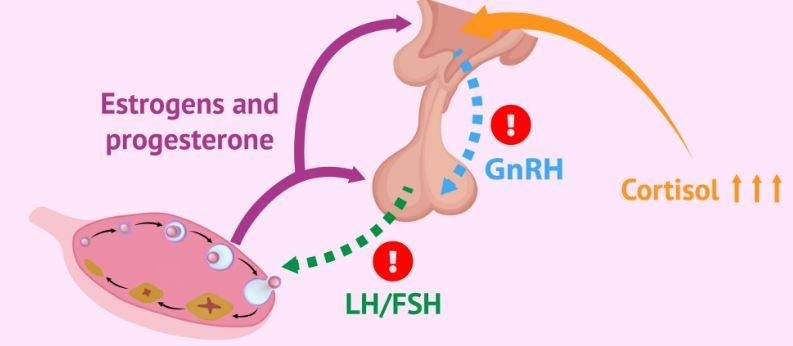
Fig 1. Alterations in the HPO axis in stressed women (https://www.invitra.com/en/stress-hinders-pregnancy/hormonal-alteration-women-chronic-stress/)
Male sex hormones disrupted by chronic stress
In a healthy state, testosterone secretion in the testis is controlled by FSH and LH. The hormone known as testosterone is the one that ultimately steps in and encourages spermatogenesis, or the production of spermatozoa. The concentrations of hormones controlled by the brain change when elevated cortisol levels are present in the blood as a result of ongoing worry. This alters testosterone production, FSH and LH levels, and sperm production. Further changes in cortisol levels have a deleterious impact on sperm parameters, causing a reduction in sperm concentration, motility, and morphology as a result of altered spermatogenesis6.
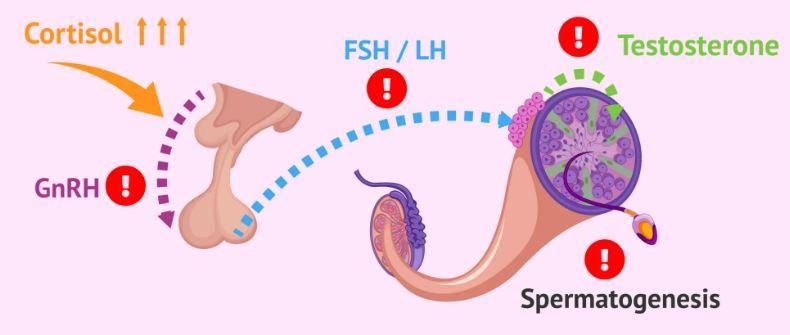
Fig 2. Alterations of the HPT axis in stressed men
Conclusion
Patients may experience great hardship after receiving an infertility diagnosis. Couples dealing with infertility face significant anguish and suffering. Patients need to be encouraged and counselled as they receive treatment. Both the American Society for Reproductive Medicine and the European Society for Human Reproduction and Embryology acknowledge the value of incorporating psychological interventions into routine practise at ART clinics, despite the fact that neither organisation has formal requirements for psychological counselling for patients with infertility. Additionally, it is widely known that stress related to infertility raises cortisol levels, which has a negative impact on the success of ART.
References
- Hannibal KE, Bishop MD. Chronic stress, cortisol dysfunction, and pain: a psychoneuroendocrine rationale for stress management in pain rehabilitation. Phys Ther. 2014 Dec;94(12):1816-25.
- Fries E, Hesse J, Hellhammer J, Hellhammer DH. A new view on hypocortisolism. Psychoneuroendocrinology. 2005;30:1010–1016.
- Herman JP, McKlveen JM, Ghosal S, Kopp B, Wulsin A, Makinson R, Scheimann J, Myers B. Regulation of the Hypothalamic-Pituitary-Adrenocortical Stress Response. Compr Physiol. 2016 Mar 15;6(2):603-21.
- Rooney KL, Domar AD. The relationship between stress and infertility. Dialogues Clin Neurosci. 2018 Mar;20(1):41-47.
- Hamilton LD, Meston CM. Chronic stress and sexual function in women. J Sex Med. 2013 Oct;10(10):2443-54.
- Ranabir S, Reetu K. Stress and hormones. Indian J Endocrinol Metab. 2011 Jan;15(1):18-22.

Endorsed by,
Dr Arti Shukla
Consultant (Obs& Gyn)
Brinda Maternity and Surgical Centre
Bokaro Steel City, Jharkhand