
Menopause
-

Menopause Unveiled: Hot Flashes & Brain Fog
Read article: Menopause Unveiled: Hot Flashes & Brain FogWomen’s Midlife Health & Neuroendocrinology A clinical deep dive into thermoregulatory dysfunction, cognitive shifts, and evidence-based relief. 1. The Neurobiology of the Menopausal Transition Menopause marks the permanent cessation of ovarian follicular activity, officially diagnosed after 12 consecutive months of amenorrhea. However, the transitional window—known as perimenopause—can span 4 to 8 years. During this time, erratic hormonal swings and the eventual precipitous decline of circulating 17β-estradiol17\beta\text{-estradiol}17β-estradiol deeply impact the central nervous system, particularly the hypothalamus, hippocampus, and prefrontal cortex. Estrogen is not merely a reproductive hormone; it functions as a potent neuro-steroid in the brain, regulating cerebral glucose utilization, neurotransmitter…
-

Vaginal Health After Menopause: Understanding the Changes and Caring for Your Intimate Health
Read article: Vaginal Health After Menopause: Understanding the Changes and Caring for Your Intimate HealthBy a Consultant Obstetrician & Gynecologist Vaginal Health After Menopause: Understanding the Changes and Caring for Your Intimate Health Menopause marks a significant milestone in a woman’s life, signaling the natural end of her reproductive years. While many women are familiar with symptoms such as hot flashes, night sweats, and mood changes, fewer are aware of the profound effects menopause can have on vaginal and urinary health. These intimate changes are common, yet they often go unrecognized or remain undiscussed due to embarrassment or the misconception that they are an inevitable part of aging. The good news is that vaginal…
-

Menopause: Embracing a New Chapter in Women’s Health
Read article: Menopause: Embracing a New Chapter in Women’s HealthEvery Woman’s Journey Is Unique Menopause is a natural stage in every woman’s life that marks the end of her menstrual cycles. While it brings physical and emotional changes, it is not a disease—it is simply a new phase of life. With the right knowledge, healthy lifestyle choices, and medical guidance, women can navigate menopause confidently and continue to enjoy an active and fulfilling life. What Is Menopause? Menopause is diagnosed when a woman has not had a menstrual period for 12 consecutive months. It usually occurs between the ages of 45 and 55 years, although the timing varies from…
-

Respecting the Hardship of Every Menopausal Woman
Read article: Respecting the Hardship of Every Menopausal WomanRespecting the Hardship of Every Menopausal Woman What is menopause? Women reach a certain age and will not have menstrual periods for a year. This can happen between the age of 46 to 52 and it’s called menopause. Although the age women experience menopause differs from one woman to another. When menopause happens, it will cause different changes in your body. The symptoms of menopause often occur due to reduced production of progesterone and estrogen in the ovaries. Symptoms of menopause The symptoms of menopause vary for every woman. The symptoms women often have are weight gain, hot flashes, or…
-

Impact of Menopause
Read article: Impact of MenopauseDr. Deepa Thangamani MD OG, DNB OG, MRCOG, FRCOG., Consultant Apollo First med hospitals, Chennai. Consultant Thamarai Fertility Solutions Exclusives, Chennai. The Menopause – Short Term & Long-Term Effects The menopause is the stage in a woman’s life when her ovaries stop producing eggs. This leads to a gradual decrease in levels of hormones oestrogen and progesterone, which in turn leads to the gradual disappearance of monthly periods. The fall in hormone levels can trigger a range of symptoms, although each woman’s experience can be different. The process of the menopause can take several years. A woman is said to…
-
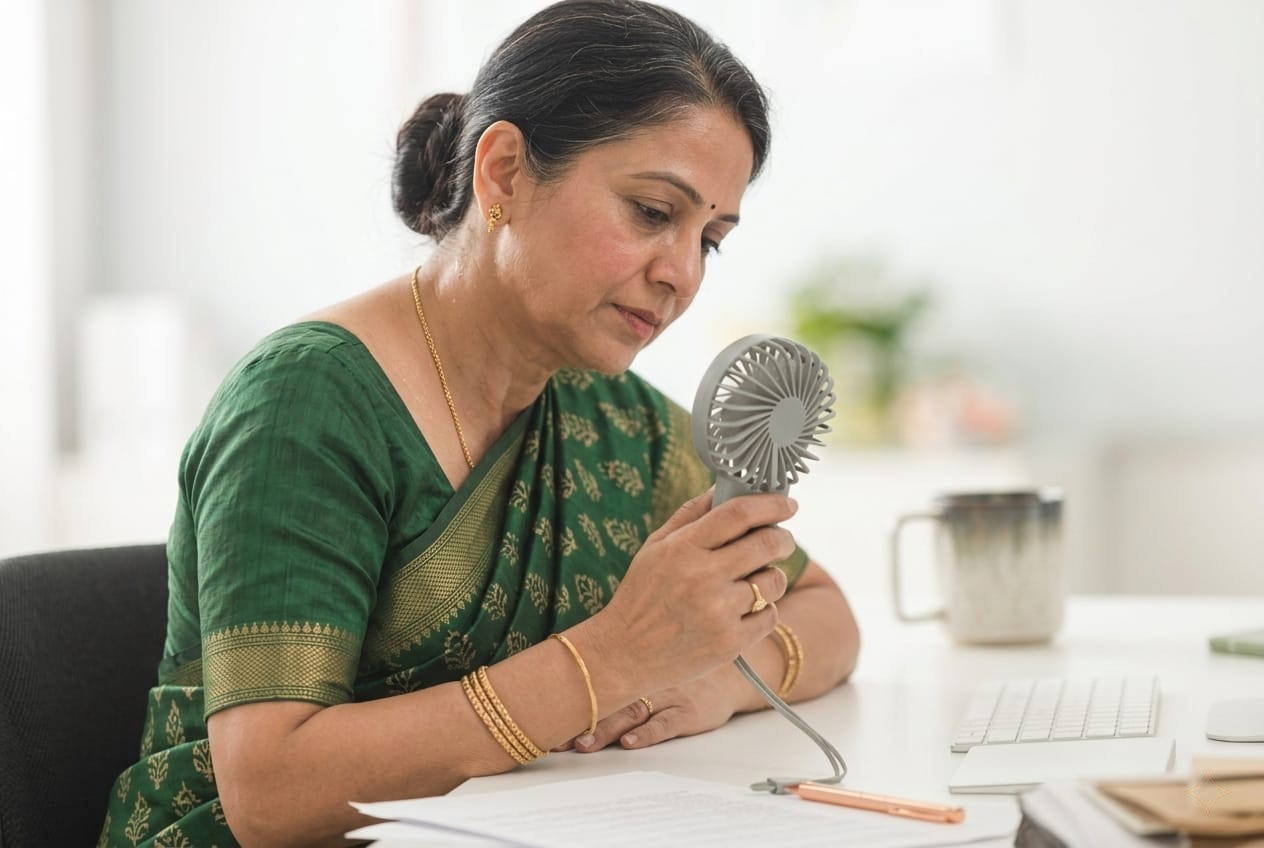
Hot flashes and menopause: everything you need to know
Read article: Hot flashes and menopause: everything you need to knowWhat is a hot flash? A feeling of intense heat that may appear suddenly or one that may seem like it is coming on gradually is called a hot flash. It is not caused by any external sources. In an episode of hot flash, you may experience 1: Hot flashes are reported by up to 85% of menopausal women and in about 55% of women even before the onset of the menstrual irregularity. This, thus, defines entry into the menopausal transition. The incidence and severity of hot flashes increases as women go through the menopause, peaking in the late transition and…
-

9 ways to emerge stronger from menopause
Read article: 9 ways to emerge stronger from menopauseMenopause marks the end of a woman’s menstruation cycle. It starts in the later stages of life for women and lasts for a couple of years. During this time, most of the women experience different symptoms which include hot flashes, night sweats, mood swings, among others. In addition to these symptoms, menopausal ladies are at a higher danger of a few diseases including osteoporosis, weight gain, heart diseases, diabetes, and others. What is Menopause? Menopause can be defined as a time when you don’t have your periods. If your last period occurred more than a year ago it means you…
-

Everything you need to know about the 3 stages of menopause
Read article: Everything you need to know about the 3 stages of menopauseMenopause is the stage that marks the end of the biological cycle of a woman’s life. Her ovaries stop producing and delivering eggs, her body creates less estrogen and progesterone, and the monthly cycle becomes irregular, until eventually ending it altogether. The menopause stage can be divided into three stages as the women progress to old age. The stages are perimenopause (when a lady’s body starts to change); menopause (when you haven’t gotten your periods for 12 continuous months); and postmenopause (for almost 24 months to three years your last period haven’t come, and eventually all the side effects start…