
By Dr. Indrashish Ray Chaudhri,
Paediatric Neurologist,
9+ years’ experience, MBBS, MD (Paediatrics),
DM (Paediatric Neurology)
Speech is one of the most awaited milestones in a child’s early development. When a child does not begin speaking at the expected age, parents may naturally become concerned. One of the most common questions is: “Does speech delay mean autism?”
The answer is NO. Speech delay and autism spectrum disorder are not the same. Many children who speak late may have an isolated speech or language delay and improve well with timely speech therapy. However, in some children, delayed speech may be one of the early signs of autism spectrum disorder, especially when it is associated with difficulties in social interaction, non-verbal communication, and repetitive behaviours.
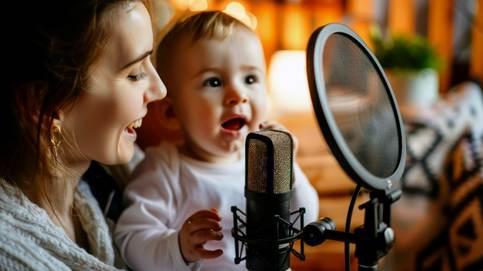
Speech Delay Is Not Always Autism
A child with an isolated speech delay may struggle to use words but usually shows a clear desire to communicate. They may point, wave, smile, maintain eye contact, imitate sounds, and use gestures to express what they want.
In autism, the concern is often broader. The child may have difficulty not only with speech, but also with social connection, shared attention, eye contact, gestures, play skills, and response to people around them. Autism affects communication, social interaction, and behaviour, while speech delay mainly affects language development.
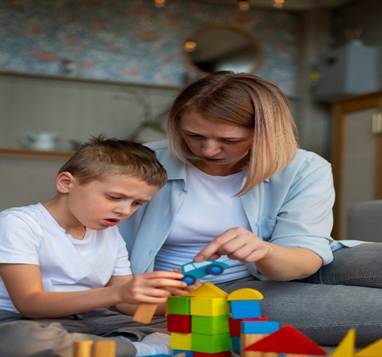
The Key Difference: Communication Beyond Words
Parents should observe how the child communicates without words.
A child with speech delay may:
- Respond when called
- Make eye contact
- Point to objects
- Wave bye-bye
- Bring toys to show parents
- Try to communicate through gestures

A child with possible autism may:
- Not respond consistently to their name
- Avoid or show limited eye contact
- Not point to show interest
- Prefer playing alone
- Repeat certain actions
- Line up toys or spin objects
- Show distress with routine changes
The presence or absence of non-verbal communication is often one of the most important clues.
Red Flags Parents Should Not Ignore
Parents should seek professional evaluation if they notice:
- No response to name by around 12 months
- Poor or limited eye contact
- No pointing to show interest by 18 months
- Lack of gestures such as waving or showing objects
- Repetitive behaviours such as hand-flapping, spinning, or lining up toys
- Loss of previously learned words, babbling, social smile, or interaction
- Reduced interest in playing or sharing attention with others
Regression at any age should always be taken seriously.
Autism can often be reliably diagnosed by around 2 years of age by trained specialists. In some children, early signs may be noticed even before that, around 12–18 months. Early diagnosis helps families begin the right therapies at the right time.
Why Early Intervention Matters
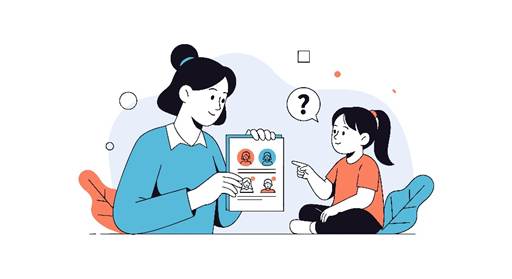
The early years are a powerful period for brain development. When concerns are identified early, children can benefit from structured support such as:
- Speech therapy
- Occupational therapy
- Behavioural therapy
- Parent-guided communication strategies
- Early developmental intervention
Early intervention does not simply focus on speech. It supports communication, social interaction, play, learning, sensory regulation, and daily functioning.
What Should Parents Do?
Parents should avoid a “wait and see” approach if they feel their child’s delay is more than just speech. It is helpful to document observations, record short videos of concerning behaviours, and discuss them with a paediatrician, developmental paediatrician, or paediatric neurologist.
Seeking help early does not mean labelling the child. It means understanding the child’s needs and providing the right support at the right time.
Conclusion
A speech delay does not automatically mean autism. Many late-talking children catch up with appropriate support. However, when speech delay is accompanied by poor eye contact, lack of gestures, reduced social interest, repetitive behaviours, or regression, autism should be considered and evaluated.
The most important message for parents is simple: do not panic, but do not delay. Early evaluation and early therapy can make a meaningful difference in a child’s developmental journey.
References
- India Autism Center – Speech Delay vs Autism: Key Differences Explained
- Better Speech – The Difference Between Speech Delay and Autism
- ECCM – The Difference Between Speech Delays and Autism
- Autism Parenting Magazine – Speech Delay vs Autism
- Connected Speech Pathology – Speech Delay vs Autism Spectrum Disorder