
If a blood test shows that your thyroid is underactive during pregnancy, you may wonder what it means for you and your baby. Hypothyroidism is treatable. Finding it early and checking your thyroid levels during pregnancy help your care team decide whether you need treatment or a change to your medicine.

Tell your maternity care team about any thyroid condition or thyroid medicine at your first visit.
What does the thyroid do?
The thyroid is a small gland at the front of your neck. It makes hormones that help your body use energy. Early in pregnancy, your baby relies on your thyroid hormone to support development, including brain development.
Why does an underactive thyroid matter?
When the thyroid makes too little hormone, the condition is called hypothyroidism. Untreated overt hypothyroidism can increase the risk of problems such as miscarriage and preterm birth. With appropriate treatment and follow-up, most people with hypothyroidism can have a healthy pregnancy.
UNDERSTANDING YOUR THYROID TESTS
What your blood tests can tell you
Tiredness and constipation can happen in both pregnancy and hypothyroidism. Feeling unusually cold or having dry skin can also occur with an underactive thyroid. Blood tests help your clinician work out whether your thyroid is involved.
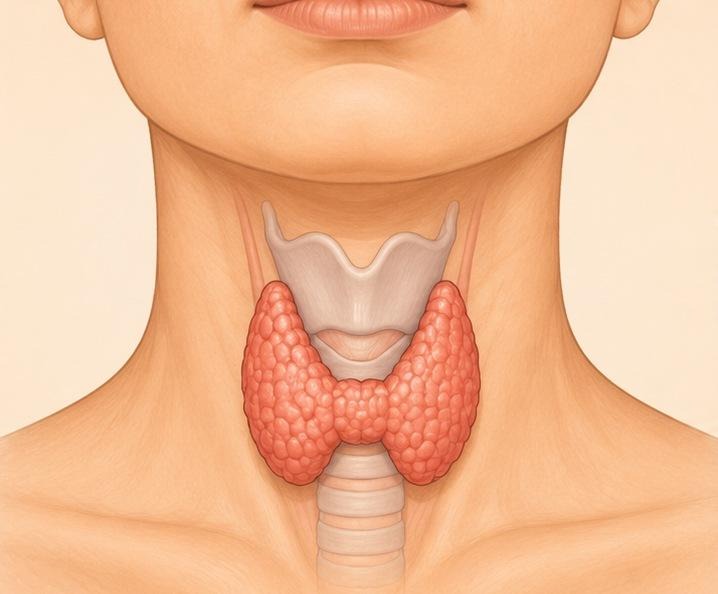
The thyroid is a butterfly-shaped gland at the front of the neck.
TSH and free T4
TSH is a signal that tells the thyroid to make more hormone. Free T4 measures one of the thyroid hormones circulating in your blood. Your clinician interprets these results using ranges appropriate for pregnancy and your stage of pregnancy.
Overt and subclinical hypothyroidism
A raised TSH with low free T4 is a typical pattern of overt hypothyroidism and usually requires treatment. A raised TSH with free T4 in the expected range is called subclinical hypothyroidism. Your clinician may repeat the tests or consider treatment based on how high the TSH is, when it was found and your medical history.
TREATMENT AND FOLLOW-UP / FAQs
Thyroid care during and after pregnancy
Levothyroxine replaces the thyroid hormone your body needs and is safe to take as prescribed during pregnancy. If you already take it, contact your clinician as soon as you know you are pregnant. You may need a higher dose early in pregnancy. Follow the plan agreed with your care team.

Ask when to repeat your blood tests and how to fit your thyroid medicine around prenatal supplements.
Can I take it with prenatal vitamins?
If your prenatal vitamins contain iron or calcium, take them at least four hours apart from levothyroxine. Iron and calcium can reduce how much of the medicine your body absorbs.
How often will my levels be checked?
If you take levothyroxine, your clinician may check TSH about every four weeks in the first half of pregnancy and again later on. Your schedule depends on your results and any dose changes.
What happens after delivery?
Ask for a plan for your dose and follow-up before delivery. Your dose may change after birth, and your clinician may recheck thyroid levels at about six weeks postpartum.