
If you’ve noticed a darker, slightly thicker patch at the back of your neck, it’s natural to wonder what caused it. One possible explanation is acanthosis nigricans, a skin change that can be linked to insulin resistance. It can occur in people with PCOS, especially when insulin resistance is present.
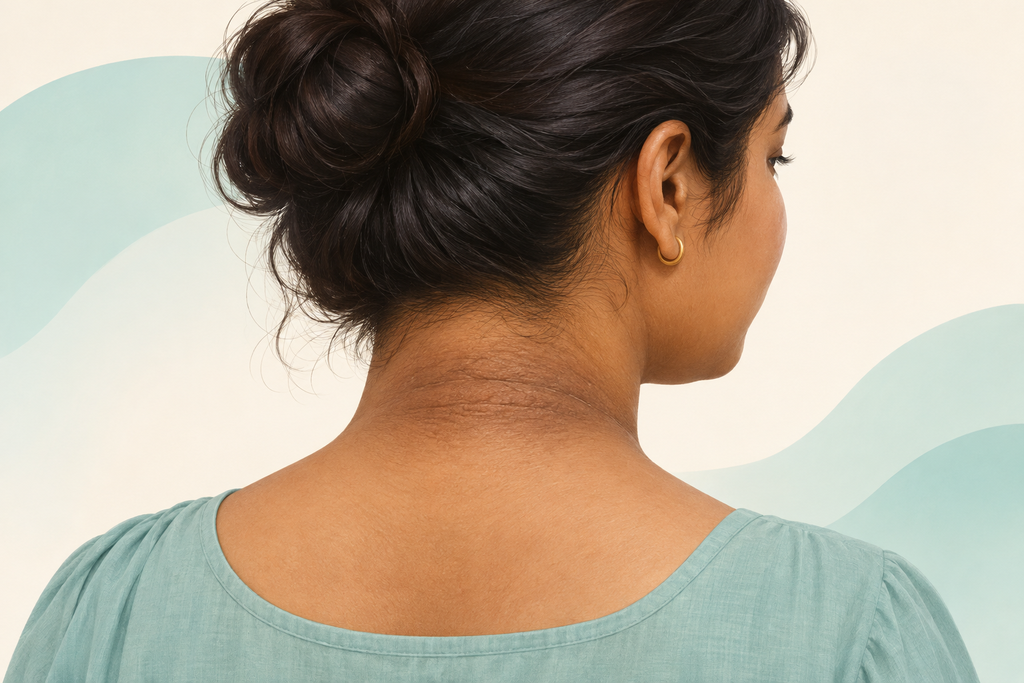
Illustration of how acanthosis nigricans may appear at the back of the neck.
PCOD, PCOS and PMOS
You may hear the term PCOD in everyday conversation. It commonly refers to what has long been called polycystic ovary syndrome (PCOS). In 2026, international experts adopted the name polyendocrine metabolic ovarian syndrome (PMOS) to reflect how the condition can affect hormones, periods and blood sugar regulation.
Symptoms vary from person to person. Some people have irregular periods, acne or extra facial hair. Others first seek help because they are having trouble getting pregnant.
UNDERSTANDING THE CONNECTION
How insulin can affect your skin and periods
What is insulin resistance?
Insulin is a hormone that helps move sugar from your blood into your cells, where it can be used for energy. With insulin resistance, your cells respond less readily to insulin. Your pancreas may make more insulin to compensate. For a while, this can keep blood sugar in the usual range. Over time, blood sugar can rise if your pancreas can no longer keep up.
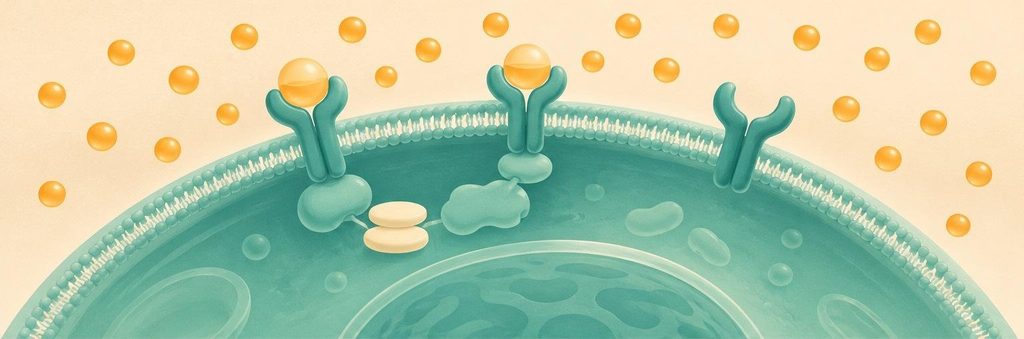
An illustration of glucose outside a cell. With insulin resistance, cells respond less readily to insulin.
Why can it affect your periods?
In some people with PCOS, higher insulin levels can encourage the ovaries to make more androgens, a group of hormones that includes testosterone. This hormonal pattern can interfere with ovulation, which is when an ovary releases an egg. When ovulation happens less often, periods may come less predictably. Higher androgen levels can also contribute to acne or extra facial and body hair.
What does acanthosis nigricans look like?
The patches are darker than the surrounding skin and can feel thicker or velvety. They often develop gradually in skin folds, such as the back of the neck, armpits or groin. Insulin resistance is one possible cause. Other conditions and some medicines can also be associated with these patches.
When should you speak to a doctor?
Get a new dark, thickened patch checked, especially if it appeared suddenly or is spreading quickly. If you also have irregular periods, acne or new facial hair, mention these changes at the same visit. The skin patch alone cannot establish whether you have insulin resistance or PCOS.
If you are diagnosed with PCOS, ask about blood sugar screening. The international guideline recommends a glucose tolerance test as the most accurate way to assess blood sugar in PCOS. During this test, you drink a measured glucose solution and have blood samples taken.
EVERYDAY CARE / FAQs
What can you do next?
Write down when you first noticed the skin change and the dates of your recent periods. If you take medicines or supplements, bring a list to your appointment. These details can help your clinician decide what to check.

Bring your recent period dates and notes about skin changes to your appointment.
Regular activity and balanced meals can support metabolic health at any body size. Start with something you can keep up, such as a regular walk or a meal that includes vegetables, dal or another protein source, and your usual rice or roti. Your clinician can discuss a plan that fits your symptoms and goals.
Can I have PCOS without a dark neck patch?
Yes. Acanthosis nigricans is one possible clue. Doctors look at your period pattern and signs of higher androgen levels, and may recommend tests depending on your age and symptoms.
Will scrubbing make the patch go away?
Scrubbing can irritate the skin. If the patch is acanthosis nigricans, treating its underlying cause can sometimes help it fade. A clinician can check what is causing it and discuss skin care if needed.
Does insulin resistance mean I have diabetes?
You can have insulin resistance while your blood sugar is still in the usual range. PCOS is associated with a higher risk of type 2 diabetes, so blood sugar screening can help identify changes early.