
Introduction
Many women experience physical, emotional, and behavioral changes in the days leading up to their menstrual period. These symptoms are often grouped under the term Premenstrual Syndrome (PMS) and are considered a normal part of the menstrual cycle for many. However, for some women, these symptoms become so intense that they interfere with work, relationships, and daily life. This more severe condition is known as Premenstrual Dysphoric Disorder (PMDD).
Although PMS and PMDD share several symptoms, they are not the same. PMDD is a recognized medical condition that requires appropriate evaluation and treatment. Understanding the differences between PMS and PMDD empowers women to seek timely medical care and improve their quality of life.
What is PMS?
Premenstrual Syndrome (PMS) refers to a group of physical, emotional, and behavioral symptoms that occur one to two weeks before menstruation and usually resolve shortly after the period begins.
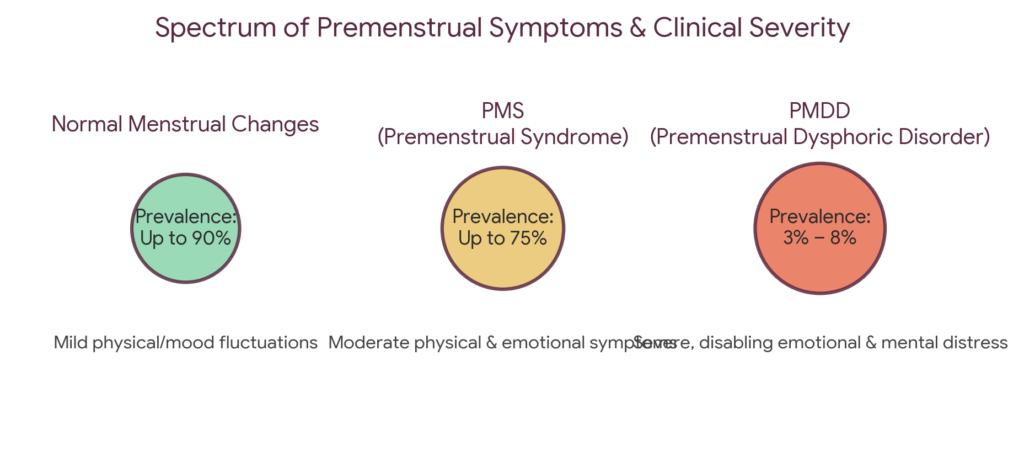
It is estimated that up to 75% of women of reproductive age experience some degree of PMS. For most, symptoms are mild and manageable through lifestyle modifications.
Common Physical Symptoms of PMS
- Breast tenderness and swelling
- Bloating and abdominal discomfort
- Headaches and mild body aches
- Fatigue and low energy
- Food cravings (especially for sweets or carbohydrates)
- Acne flare-ups and skin changes
- Weight fluctuations due to fluid retention
- Joint or muscle pain
Common Emotional Symptoms of PMS
- Mood swings
- Mild anxiety and tension
- Irritability or impatience
- Feeling overwhelmed
- Difficulty concentrating
- Changes in sleep patterns (insomnia or excessive sleepiness)
Although these symptoms may be bothersome, they generally do not prevent women from carrying out their daily activities.
What is PMDD?
Premenstrual Dysphoric Disorder (PMDD) is a more severe and disabling form of PMS. It affects approximately 3–8% of women during their reproductive years.
Women with PMDD experience intense emotional and psychological symptoms that significantly affect their personal, professional, and social lives. Unlike PMS, PMDD is recognized as a medical disorder in diagnostic manuals (such as the DSM-5) and requires appropriate diagnosis and medical treatment.
Common Symptoms of PMDD
- Severe depression and marked feelings of hopelessness
- Extreme irritability or persistent, severe anger
- Intense mood swings and sudden tearfulness
- Anxiety or panic attacks and acute nervous tension
- Persistent anger leading to frequent interpersonal conflicts
- Loss of interest in daily activities, hobbies, and relationships
- Difficulty concentrating and subjective feeling of brain fog
- Severe fatigue and total lack of energy
- Appetite changes (binge eating or specific severe cravings)
- Sleep disturbances including insomnia or extreme hypersomnia
Physical symptoms similar to PMS may also occur in PMDD, but they are often overshadowed by the severe emotional distress.
PMS vs PMDD: Key Differences
| Feature | Premenstrual Syndrome (PMS) | Premenstrual Dysphoric Disorder (PMDD) |
|---|---|---|
| Severity | Mild to Moderate | Severe and Disabling |
| Primary Symptoms | Physical discomfort & mild mood shifts | Intense emotional & psychological distress |
| Daily Activities | Usually unaffected or slightly hindered | Significantly affected; daily impairment |
| Relationships | Mild strain or occasional irritability | Serious conflicts, social withdrawal |
| Work/School | Minimal impact on productivity | Often impaired; frequent missed days |
| Medical Treatment | Sometimes needed (OTC remedies) | Usually necessary (SSRIs, Therapy, Hormones) |
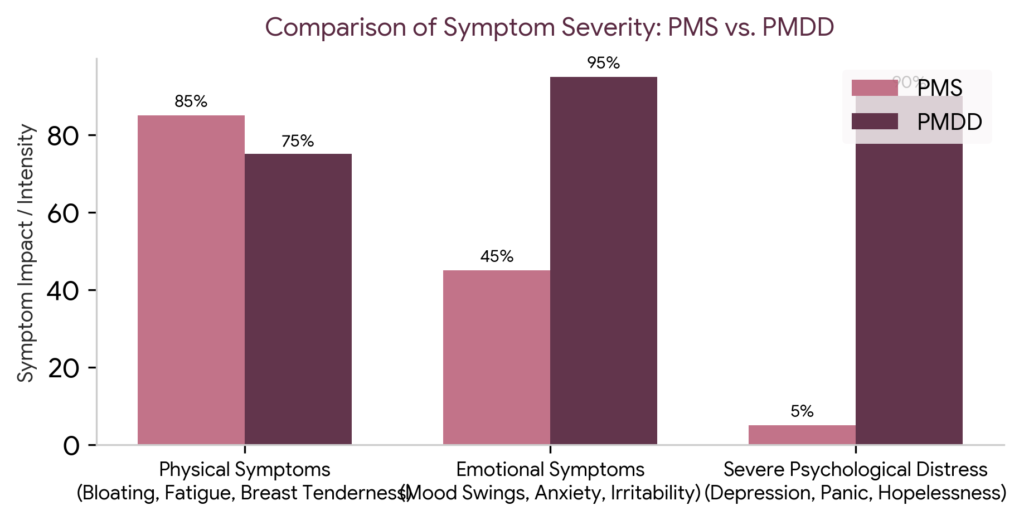
One of the biggest differences is the impact on quality of life. While PMS can be uncomfortable, PMDD can make routine daily functioning extremely difficult.
Why Do PMS and PMDD Occur?
The exact cause remains unclear, but researchers believe these conditions result from a complex interaction between natural hormonal fluctuations and neurochemistry.
During the menstrual cycle, estrogen and progesterone levels fluctuate predictable ways. These hormonal shifts influence neurotransmitters in the brain, particularly serotonin, which plays a central role in regulating mood, sleep, appetite, and emotional balance.
Women with PMDD appear to have an increased cellular or neurochemical sensitivity to these normal hormonal fluctuations, even though their actual circulating hormone levels are generally within normal limits.
| 📌 Risk Factors & Contributing Influences • Family history of premenstrual disorders or mood conditions• Personal history of depression, postpartum depression, or anxiety disorders• High chronic stress levels• Poor sleep hygiene or chronic sleep deprivation• Lack of physical activity• Smoking, excessive caffeine, or alcohol consumption |
Recognizing and Diagnosing Symptoms
Physical vs. Emotional Symptom Spectrum
While physical symptoms like abdominal bloating, breast tenderness, headaches, muscle aches, fatigue, and weight gain from fluid retention occur in both conditions, emotional symptoms dominate PMDD.
Symptoms associated with PMDD typically feature severe emotional distress including persistent sadness, excessive or unprovoked crying spells, sudden anger outbursts, acute anxiety, panic attacks, feelings of being out of control, and extreme social withdrawal.
A key clinical marker is timing: symptoms usually begin during the luteal phase (after ovulation) and disappear within a few days after menstruation starts, followed by a completely symptom-free interval.
How is PMDD Diagnosed?
There is no single blood test or imaging scan to diagnose PMDD. Healthcare providers diagnose the condition through comprehensive clinical evaluation:
- Menstrual & Medical History: Detailed discussion of physical and emotional timeline.
- Symptom Tracking Diary: Prospective daily rating of symptoms over at least two consecutive menstrual cycles.
- Evaluation of Timing: Confirming symptoms are confined to the luteal phase.
- Functional Impact Assessment: Evaluating impairment in work, school, and personal relationships.
- Differential Diagnosis: Ruling out underlying psychiatric conditions (e.g., major depressive disorder, generalized anxiety disorder) or thyroid abnormalities.
| 🗓️ Diagnostic Tip Keeping a daily symptom tracking diary for 2–3 cycles is considered the gold standard for clinical diagnosis. It helps distinguish true premenstrual disorders from continuous mood disorders that merely worsen before a period. |
Management and Treatment Strategies
Managing PMS (Lifestyle Modifications)
Most women with mild-to-moderate PMS experience significant relief through key lifestyle changes:
- Nutritional Adjustments: Eat complex carbohydrates (whole grains, oats), fresh fruits, vegetables, lean proteins, and foods rich in calcium and magnesium. Reduce intake of salt, refined sugars, processed foods, caffeine, and alcohol.
- Regular Exercise: Aim for at least 150 minutes of moderate aerobic activity weekly (walking, swimming, cycling). Exercise stimulates endorphin release, lowering stress and boosting mood.
- Stress Reduction: Practice mindfulness, yoga, deep breathing exercises, and ensure consistent 7-9 hours of restful sleep every night.
Treatment Options for PMDD
Because PMDD is a medical condition, lifestyle changes are foundational but often need to be combined with targeted clinical therapies:
- Cognitive Behavioral Therapy (CBT): Helps identify negative thought patterns, manage stress, and develop coping strategies specifically tailored to premenstrual mood shifts.
- Selective Serotonin Reuptake Inhibitors (SSRIs): First-line medical treatment for PMDD. SSRIs can be taken either continuously (every day) or luteal-phase only (from ovulation until period starts).
- Hormonal Contraceptives: Continuous or combination oral contraceptive pills (especially those containing drospirenone) can suppress ovulation and stabilize hormonal shifts.
- Targeted Symptom Relief: Non-steroidal anti-inflammatory drugs (NSAIDs) for pain, and specific nutritional supplements under medical guidance.
| 🚨 When Should You Consult a Doctor? You should consult a qualified healthcare provider or gynecologist if: • Symptoms severely disrupt your ability to function at work, school, or home. • Your personal or professional relationships are suffering from severe conflicts. • Emotional distress feels unmanageable, or you experience thoughts of self-harm. • Conservative lifestyle changes do not provide adequate relief. • Symptoms persist consistently month after month. |
Can PMS or PMDD Be Prevented?
While natural hormonal fluctuations cannot—and should not—be completely eliminated, the severity of symptoms can be minimized through proactive habits:
- Maintain a balanced, nutrient-dense diet rich in whole foods and essential minerals.
- Engage in regular physical activity throughout the entire month, not just premenstrually.
- Prioritize sleep hygiene and maintain a regular sleep schedule.
- Limit triggers such as excessive caffeine, alcohol, and high-sodium foods.
- Establish regular gynecological check-ups and open communication with your physician.
Frequently Asked Questions (FAQ)
Q: Is PMDD just severe PMS?
No. PMDD is a distinct medical condition recognized in medical diagnostic criteria. While PMS involves manageable physical and mild mood changes, PMDD causes severe psychological impairment and significant daily distress.
Q: Can PMDD affect fertility?
No. PMDD itself does not direct affect ovulation, ovarian reserve, or fertility. However, the emotional strain and fatigue caused by severe symptoms can affect sexual intimacy and overall quality of life.
Q: Does every woman with PMS eventually develop PMDD?
No. Most women with PMS will never develop PMDD. PMDD affects only about 3% to 8% of menstruating individuals and is linked to specific neurochemical sensitivities.
Q: Can dietary adjustments really improve symptoms?
Yes. Research shows that stabilizing blood sugar with complex carbohydrates, reducing inflammatory foods (excess salt/sugar), and ensuring adequate calcium, magnesium, and vitamin B6 can noticeably reduce PMS physical and mood symptoms.
Q: Should I ignore severe mood changes before my period?
Never. Persistent or severe mood changes, feelings of severe hopelessness, or intense anger should always be evaluated by a medical professional to ensure safety and proper treatment.
Q: How long do PMDD symptoms typically last each cycle?
PMDD symptoms occur during the luteal phase, typically lasting anywhere from 7 to 14 days before menstruation, and improve rapidly within 1–3 days after your period begins.
Q: Are there specific lab tests to diagnose PMS or PMDD?
No. Standard blood tests usually show normal hormone levels in women with PMS/PMDD. Diagnosis is based on tracking symptom patterns and timing over consecutive cycles.
Q: Can birth control pills cure PMDD?
Birth control pills can help stabilize hormonal fluctuations and reduce symptoms for many women, particularly formulations containing drospirenone. However, response varies, and medical guidance is essential.
Key Takeaways & Conclusion
| ✨ Summary Highlights ✓ PMS is extremely common and generally mild to moderate, managed easily with lifestyle steps.✓ PMDD is a recognized, disabling medical disorder requiring professional diagnosis and treatment.✓ Emotional and psychological symptoms are far more intense and disruptive in PMDD.✓ Symptom tracking diaries are essential tools for accurate diagnosis.✓ Effective treatments exist—including CBT, SSRIs, and hormonal therapies—that dramatically improve quality of life. |
Premenstrual changes are a natural part of the biological cycle, but they should never prevent a woman from living a healthy, productive, and fulfilling life. Understanding the distinction between PMS and PMDD is the critical first step toward receiving appropriate care.
If your symptoms are affecting your emotional health, relationships, career, or daily happiness, please reach out to a qualified gynecologist or healthcare professional. With accurate diagnosis, personalized treatment, and targeted lifestyle modifications, both PMS and PMDD can be effectively managed—allowing you to regain control and well-being.